
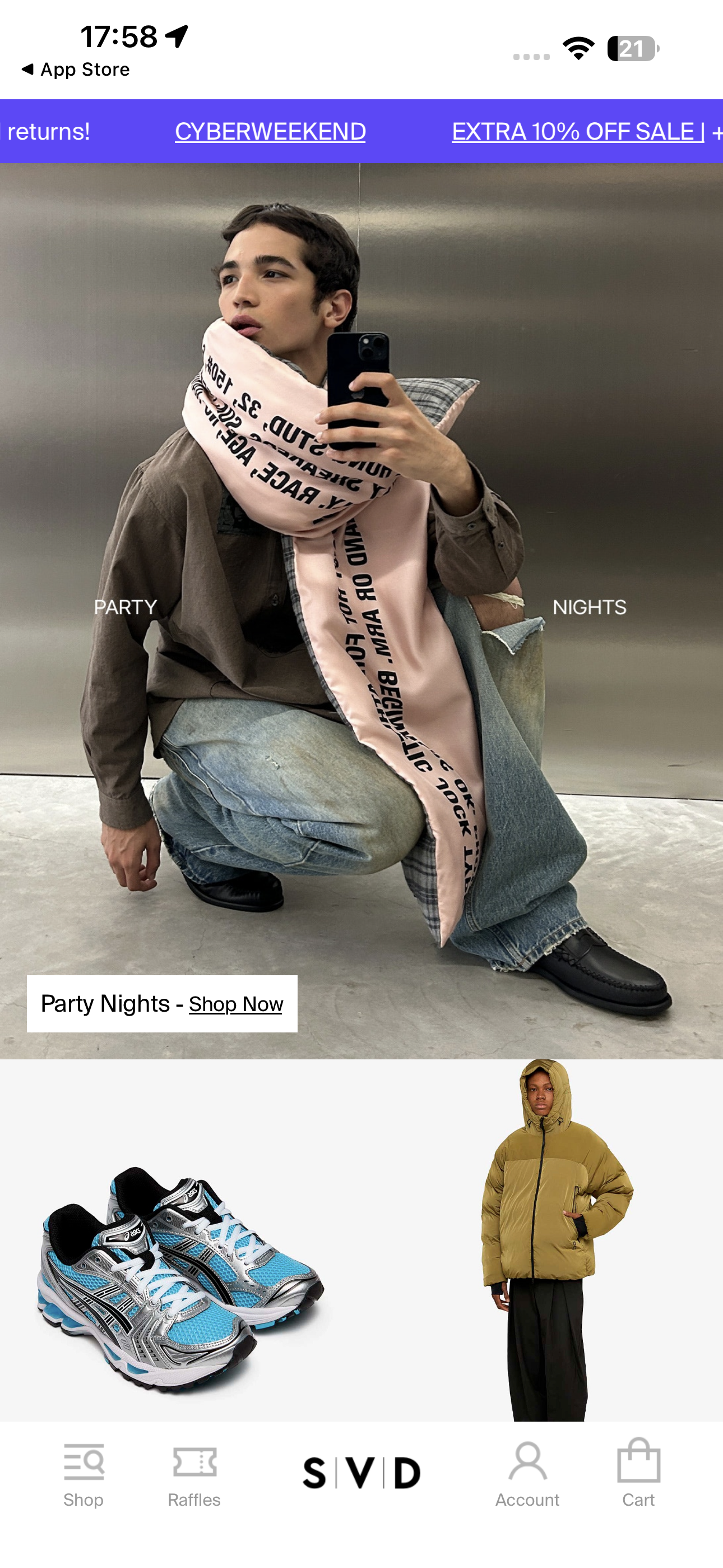
When I joined SiVasDescalzo in 2021 as an intern, I didn’t know I was about to dive into one of the most competitive segments of e-commerce: limited edition sneakers and urban fashion.
It was my first job in mobile development. The team was three people managing a React Native app for iOS and Android. With no previous experience, I had to learn fast.
And learn I did.
The Business: Exclusive Drops and High Demand
SiVasDescalzo isn’t just any shoe store. It’s a premium retailer specializing in:
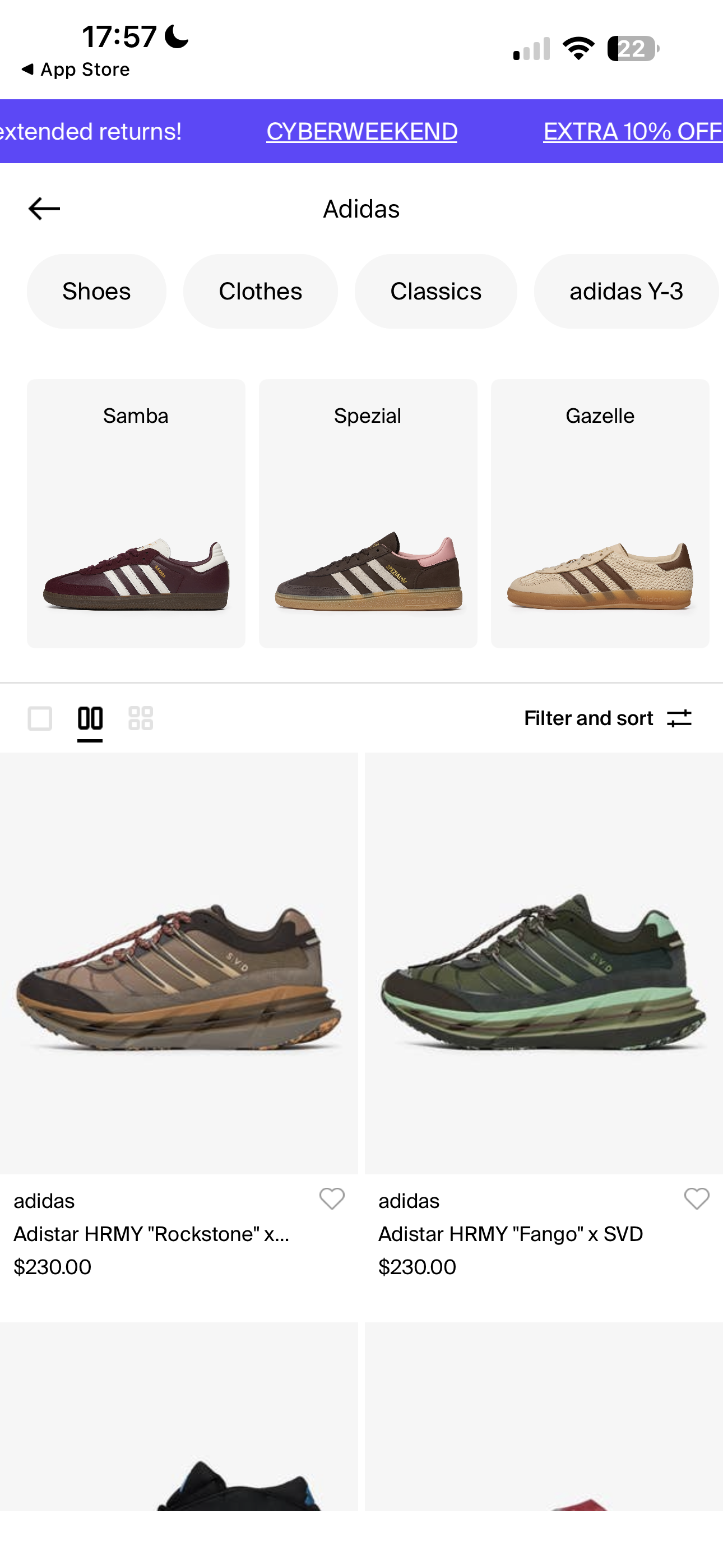
- Exclusive drops: Limited releases of high-demand sneakers
- Brand collaborations: Special editions with Nike, Adidas, New Balance
- Urban fashion: Streetwear and accessories from premium brands
The problem with selling limited products is simple: demand always exceeds supply.
When an exclusive collaboration drops with 200 units available and 5,000 people want to buy it, how do you decide who gets the product fairly?
The Raffle System: Democratizing Access
The solution: raffles (draws).
Instead of “first come, first served” (which favors bots and automated scripts), we implemented a system where:
- Registration period: Users register for the raffle during a time window
- Random selection: An algorithm randomly selects winners
- Push notification: Winners receive a notification with limited time to complete the purchase
- Captchas and validations: Multiple security layers to prevent bots
This system was crucial for the business. It guaranteed:
- Fairness: Everyone has the same chance
- User experience: No race against the clock
- Bot protection: Drastic reduction of system exploitation
My Role: Learning by Doing
As an intern who became a junior during that year, my work was eclectic:
Feature development:
- Implementation of raffle flow screens
- Push notification integration
- Product and cart UI/UX improvements
Optimization and performance:
- Reduction of unnecessary backend requests
- Interaction optimization to improve fluidity
- Ensuring the app worked well on iOS and Android
Anti-bot system:
- Captcha integration at critical points
- Additional frontend validations
- Backend coordination to reinforce security
The reality of a small startup team is that you wear many hats. One day you’re implementing animations, the next you’re debugging an Android performance issue, and the third you’re in a product meeting discussing user flow.
Technical Challenges
1. Push Notifications at Critical Moments
When a user won a raffle, they had limited time (usually 30 minutes) to complete the purchase. The push notification had to:
- Arrive immediately
- Open the app directly to the checkout screen
- Clearly show the remaining time
- Handle cases of users without connection
A 2-minute delay in the notification could mean losing the sale.
2. Performance on Low-End Devices
Not all our users had the latest iPhones or Pixels. The app had to run smoothly on:
- Mid and low-end Android devices
- Older generation iPhones
- Slow internet connections
This meant:
- Minimizing image sizes
- Reducing API calls
- Intelligently caching data
- Optimizing animations to not affect performance
3. iOS + Android Coordination
With a single React Native codebase for both platforms, we had to ensure:
- Push notifications worked the same on both
- UI looked good on diverse screen sizes
- Edge cases for each platform were covered
What I Learned
This year at SiVasDescalzo was my real mobile development bootcamp.
1. How E-commerce Works
Before this job, I had never thought about:
- Real-time inventory management
- Optimized checkout flows
- Payment systems
- Transactional notifications
- User analytics
I experienced it all firsthand.
2. The Mobile Tech Stack
React Native, TypeScript, third-party integrations, push notifications, deep linking, analytics, crashlytics… I went from reading about these technologies to using them daily.
3. Working in a Small Team
Three people handling the entire mobile layer of an active e-commerce teaches you:
- Autonomy: No time to wait. You have to research, decide, and implement.
- Communication: With a small team, direct and clear communication is critical.
- Ownership: You feel the impact of your work. Your bug affects thousands of users immediately.
4. The Business Matters
I wasn’t just writing code. I was building tools that:
- Generated revenue
- Affected brand perception
- Determined whether users returned or not
Understanding the “why” behind each feature made me a better developer.
Results
By the end of my year at SiVasDescalzo:
- ✅ The app was noticeably more fluid than when I arrived
- ✅ I had contributed to multiple successful raffle launches
- ✅ The anti-bot system worked and significantly reduced fraud
- ✅ I had gone from intern to junior developer
More importantly: I had confirmed that mobile development was my path.
Final Thoughts
SiVasDescalzo was my introduction to professional mobile development. It wasn’t a perfect environment—no first job is—but it was the ideal place to:
- Learn fast: Startup environment, small team, need to move quickly
- Understand the business: Real e-commerce with real users and real problems
- Build a solid foundation: React Native, TypeScript, mobile architecture, teamwork
The next steps in my career (ManoMano, Macadam) built on this foundation. But SiVasDescalzo was where it all started.
Where I discovered that building mobile experiences for thousands of users was exactly what I wanted to do.
Starting in mobile development? The key isn’t the perfect environment, but a place where you can learn by doing, make mistakes, and have real impact. The rest comes with time.